
Uncovering What Makes Co-Design Facilitation Work in the Real World
Role
Lead Researcher
Timeline
6 months
Methods
Workshop observations • Facilitator interviews • Job market analysis
The Challenge
Co-design workshops often fail in industry because academic facilitation models don't account for tight deadlines, stakeholder politics, and business constraints.
My Approach
I studied facilitation "in the wild" by observing real workshops, interviewing practitioners, and analyzing 470 job postings to understand what actually works.
The Impact
Identified three practices that distinguish industry facilitation from academic models: directive decision-making, speed-optimized tool selection, and strategic application. Currently being integrated into design education and hiring frameworks.
01 The Problem
Here's what I kept hearing from design teams:
Co-design workshops sound great in theory, but they're a mess in practice.
Frankie B.
Academic frameworks assume you have time, willing participants, and clear goals. But in industry, they' re often facilitating with:
Stakeholders who have conflicting priorities.
Frankie B.
2-hour time slots (not 2-day workshops)
Jesse N.
Pressure to deliver actionable outcomes immediately.
Jamie L.
My research question:
What separates effective facilitation in industry from what we learn in textbooks?
Why this mix?
I didn't want to just ask facilitators what they do. I wanted to see what they do, then understand why they made those choices. The job posting analysis gave me a reality check on which skills matter most in the market.
How I got access?
I leveraged my network in the design community and reached out to facilitators who had shipped products at consultancies and tech companies. I offered to help with workshop documentation in exchange for observation access. This solved the "access problem" many researchers face when studying proprietary processes.
02 My Approach
I used three complementary methods to triangulate findings:
01

Workshop Observations
Observed 10 co-design sessions with cross-functional teams to see how facilitators adapt in real-time when plans fall apart.
02
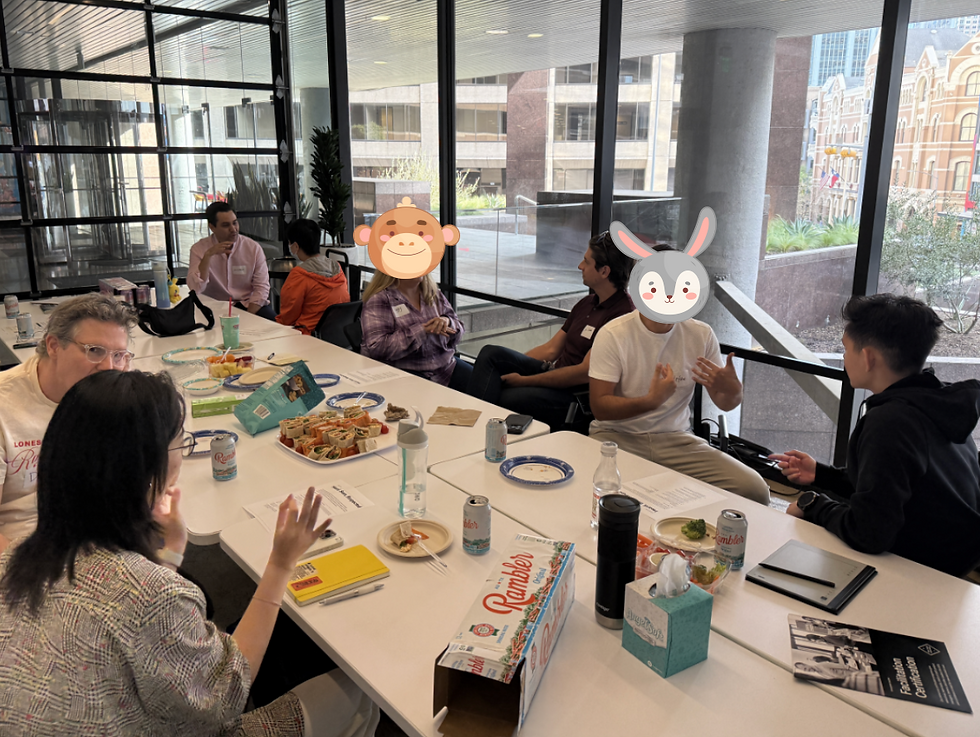
Facilitator Interviews
Interviewed 23 practitioners with 5+ years experience to understand the mental models behind their decision-making.
03

Job Posting Analysis
Analyzed 470 postings across design, UX, and product roles to identify which facilitation skills companies actually pay for.
03 Key Findings
Industry facilitators are "directing," not "neutral".
The traditional belief is that facilitators should stay neutral. But the most effective facilitators I observed were directive: they made strong choices about tools, timelines, and which ideas to pursue.
"I'm not here to just moderate. I'm here to drive decisions. Sometimes that means making a call when the group is stuck."
— Professional Facilitator
With 2 hours, 8 stakeholders, and a 6-week launch deadline, directive facilitation gets teams to outcomes faster. When I asked participants to choose between autonomy or clarity, 7 out of 8 chose clarity.
1
Facilitation is a business skill, not just a workshop skill.
When I analyzed 470 job postings, "facilitation" appeared across roles far beyond "Design Facilitator":
32% of Design Leadership roles, 28% of UX Research roles, and 21% of Design Strategy roles.
Companies aren't hiring "facilitators." They're hiring senior designers and researchers who can facilitate.
3
Tools are curated for speed, not fidelity.
Facilitators constantly remix methods. One used
"How Might We" but skipped affinity mapping
because the team already had alignment. Another
replaced 30-minute brainstorming with "crazy 8s"
(8 ideas in 8 minutes), generating 64 ideas in 10 minutes. Thus, optimize for energy and time, not methodological purity.
2
The real skill? Adaptive decision-making.
In one workshop, the facilitator noticed
the group stuck on a single idea 15 minutes in. She pivoted from ideation to "5 Whys" to dig deeper.
The session ran over, but the team left with a clearer problem statement.
4
04.Impact & What's changed
For educators
I'm working with adesign school to integrate these findings into their curriculum. Instead of teaching "neutral facilitation," they're now teaching "adaptive facilitation," focusing on how to balance direction with collaboration.
For practitioners
I've shared these insights with 20+ facilitators in my network. The most common response? "This is exactly what I do, but I didn't know how to explain it." This research gives facilitators language to articulate their value to stakeholders.
For hiring managers
The job posting analysis revealed that facilitation is a senior-level skill. Companies should look for candidates who can demonstrate strategic facilitation, aligning teams around business goals rather than just running workshops.
05 Reflections
The challenge
Access to industry workshops was hard. Many companies are protective of their internal processes. I overcame this by offering to help with workshop documentation in exchange for observation access.
What I learned
The gap between academic theory and industry practice isn't because practitioners are "doing it wrong." They're adapting to constraints that academics don't face. The challenge is to build frameworks flexible enough to work in both contexts.
What I'd do differently
I'd conduct a longitudinal study, following the same facilitators across multiple projects to see how they adapt their approach over time.