
08
What's Next
The success of "See Your Superpower" points to broader opportunities. We're exploring:
01
Digital extensions for continued skill practice
02
Partnerships with schools for integrated programming
03
Adaptations for other age groups and disabilities
Because ultimately, this isn't about superpowers—it's about recognizing the heroism in everyday acts of courage. As one participant reminded me:
"In real life, even if you don't have a superpower,
you can still be a hero"

See Your Superpower
Designing confidence through drama for visually impaired teenagers.
Role:
Service Designer (Independent Project)
Duration:
6 months
Partners:
The Lighthouse Guild
01
The Challenge

"Even though they’re 17, their social skills are like those of a 12-year-old"
the youth program director told me during my first week volunteering.
Across Manhattan’s vision support programs, I saw capable teenagers with visual impairments choose isolation over interaction.
Statistics show that among 26.9 million Americans with visual impairments, teenagers faced unique developmental challenges. Yet numbers alone couldn’t explain their five-year social gap.
"I don’t think I have any strengths"
one 16-year-old told me. Similar sentiments echoed throughout the program. These teenagers couldn't see their own capabilities. Why?
02
Discovery Through Immersion
Over six months, I embedded myself within Manhattan's visually impaired community through:
01

Ethnographic fieldwork
with 5 networking groups (62 participants).
02

In-depth interviews
with 26 experts, 52 visually impaired individuals (29 teenagers), and 7 parents
03

Participatory observation
at 4 youth programs during 3 month.
04

Co-creation sessions
with visual impaired teenagers, volunteers, educators and program manger to design solutions.
Initially, I assumed they needed skills training. But three insights emerged that changed everything:
Insight 1
Isolation from peers
"I don't want to use my cane. I want to look the same as my classmates."
Insight 2
Fear of rejection
"I don't want to be rejected, so I don't try."
Insight 3
Comfort zone paralysis
"I like staying home because it's more comfortable."
These weren't just social challenges, they were confidence barriers. When multiple teenagers independently said "I don't have any strengths," I realized we'd been solving the wrong problem.
03
Reframing the Problem

Traditional approaches focus on mobility training and assistive technology.
But my research revealed a different need: confidence is the foundation of independence. Without it, no amount of technical training helps.
I reframed the challenge:
How might we build confidence through progressive challenges?

04
Designing the Service
The solution emerged through iterative prototyping with teenagers themselves. "See Your Superpower" uses drama and superhero narratives to create a safe space for growth.
01
Design Principles
Peer support
Mix participants from different backgrounds to break down barriers.
Progressive challenges
Bridge fantasy play to real-world application.
Role reversal
Position visually impaired teenagers as guides and leaders.
02
Two phases service

Phase 1
Super Stage (Communication skills)
Teenagers create superhero identities, develop powers, and perform original plays. Through character creation and storytelling, they practice self-expression, teamwork, and public speaking in a judgment-free environment.
Phase 2
Super Stage (Communication skills)
Taking their superhero personas into the real world, participants complete missions like navigating to Central Park or ordering at a new restaurant. The superhero identity provides psychological armor for trying scary things.
05
Prototyping in Action
01
First iteration
3 participants, 45 minutes
Discovered the superhero theme immediately engaged teenagers who loved gaming and fantasy.
However, activities needed more structure.


02
Second iteration
15 participants in mixed groups
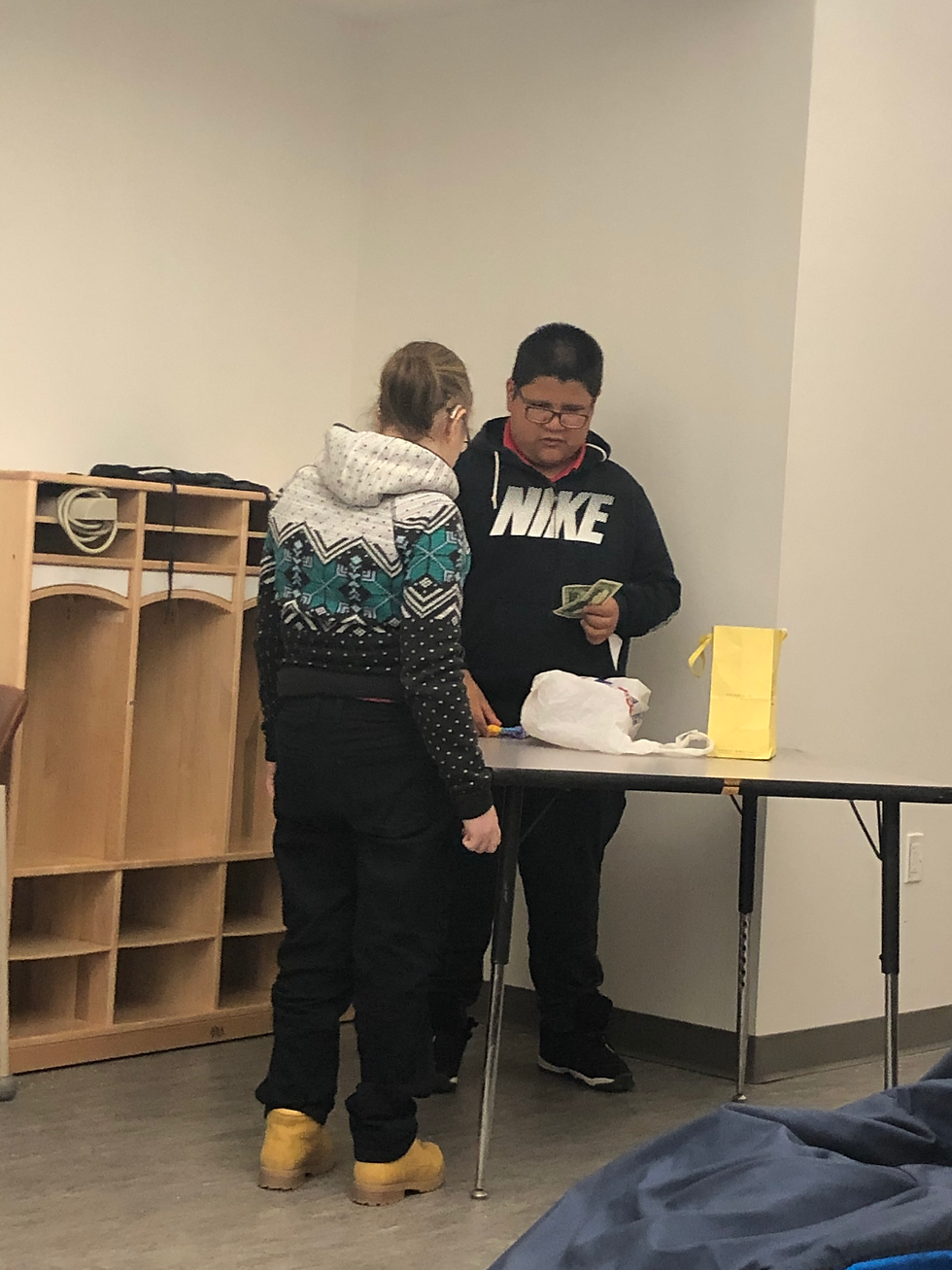
Found optimal group size (3-5 people) and that mixing school backgrounds increased engagement.
Gender-mixed groups required additional ice-breakers.


03
Pilot program
25 participants over 2 months
Confirmed the progression from theatrical skills to real-world application.
Participants reported feeling "like a different person" when wearing their superhero identity.


"When I'm my superhero, I forget to be scared. And then I realize, maybe I don't need the mask anymore."
But numbers only tell part of the story. One participant shared:


Communication
-
Asking strangers for help: 0 → 1 "very confident", 12 → 2 "not confident"
-
Initiating conversations: 48% increase in confidence scores
Problem-solving ability
-
Handling unexpected situations: 0 → 2 "very confident"
-
Independent navigation: 7 → 0 reporting "not confident"
Self-confidence
-
100% participants reported feeling “more prepared” to engage socially
06
Measuring Impact
25 participants showed dramatic confidence shifts across three key areas:
07
Reflections on Service Design
This project reinforced key service design principles:
01
Meet people where they are
By starting with teenagers' interests (gaming, superheroes), we created immediate engagement.
02
Design with, not for
Every program element emerged from co-creation with participants.
03
Systems thinking
True impact required engaging the entire ecosystem—teenagers, parents, schools, and community organizations.
04
Progressive disclosure
Complex skills become achievable through incremental challenges.